
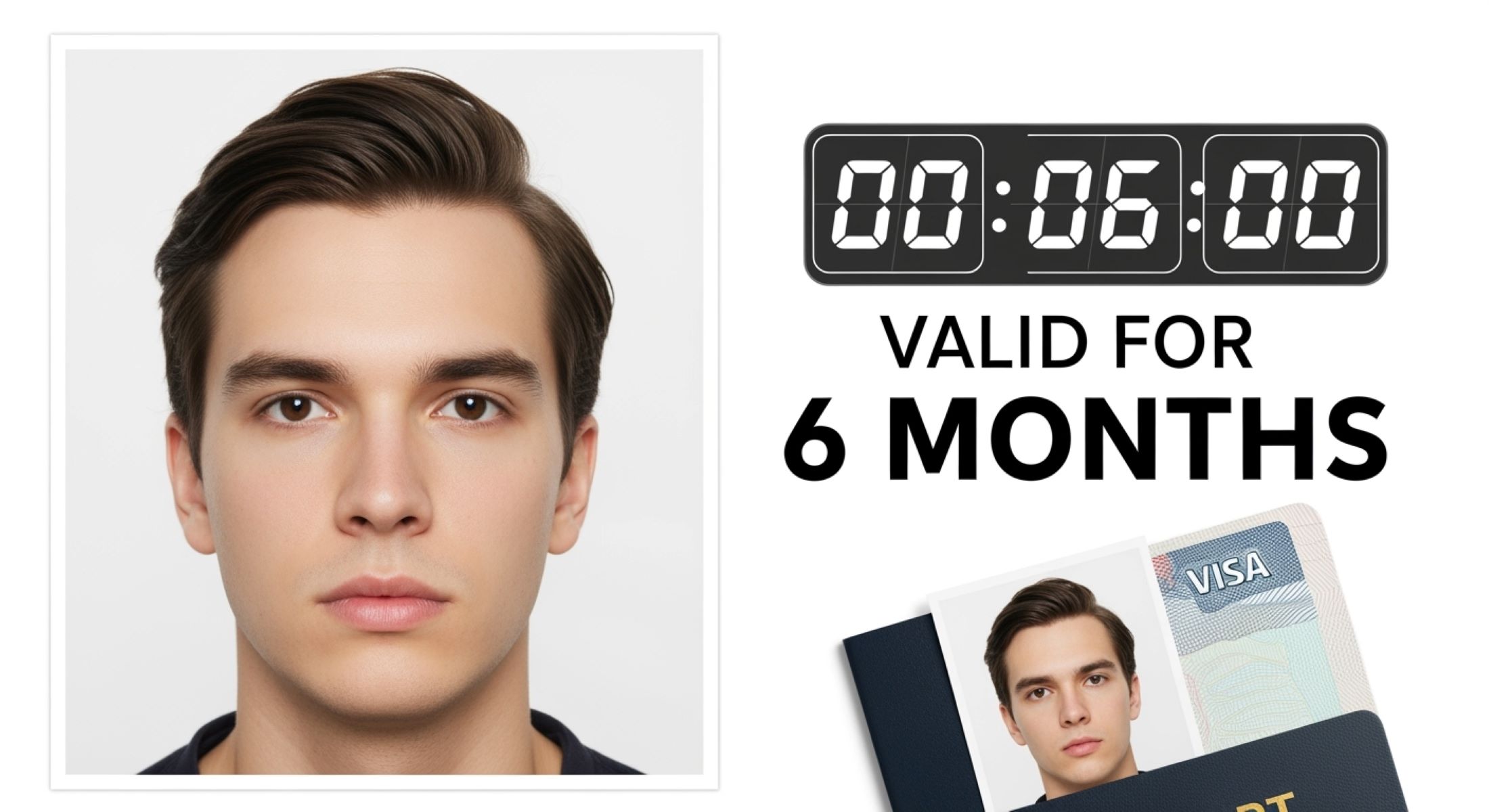
When it comes to traveling abroad, most of us obsess over packing, flight schedules, and travel insurance. But have you ever thought about how critical a small square of your face—a visa photo—really is? You might roll your eyes, thinking, “It’s just a photo!” But trust me, it’s more important than you think. Let’s break down why a visa photo must be recent and how long it stays valid.
The Importance of a Visa Photo
You might wonder, why do consulates care so much about a tiny photo? The truth is, a visa photo is far more than just a snapshot of your face. It acts as your official identity marker during international travel, essentially serving as a visual passport. Immigration officers rely heavily on this image to confirm that the person presenting the visa is the same individual who applied for it. Any discrepancy, even subtle, can trigger scrutiny, delays, or, in the worst case, rejection of your application. Think of it like a digital handshake with the country you are about to visit—clear, accurate, and current representation matters.
One of the primary reasons visa photos are so critical is identity verification. Border control officers need to match the person standing in front of them with the photo on official documents. This process reduces the risk of identity fraud, smuggling, and unauthorized entry. A recent photo ensures that your appearance is accurately captured—no drastic haircuts, weight changes, or filtered selfies that could make recognition difficult. Without a recent photo, even minor differences could slow down your journey or raise red flags.
Another key factor is legal compliance. Many countries have strict regulations about the age of the photo you submit with your visa application, often requiring it to be taken within the last six months. Submitting an outdated image can lead to visa rejection, unnecessary processing delays, or even denial of entry upon arrival. Adhering to these guidelines is not just bureaucratic red tape—it’s a legal requirement designed to maintain security and ensure that international travel documentation is accurate and trustworthy.
Finally, there’s the matter of consistency across documents. Your visa photo often mirrors the photo in your passport and sometimes even your travel permits. If your visa photo is outdated, immigration authorities may notice discrepancies, as the image serves as a visual “key” connecting all your travel documents. Consistency helps avoid confusion and ensures a smooth experience at checkpoints, providing authorities with confidence that your identity is legitimate and your documents are genuine. In short, a recent and accurate visa photo protects both you and the countries you visit.
How Recent Must a Visa Photo Be?
Visa photos are not just arbitrary squares of your face—they are carefully regulated identifiers that must meet strict age requirements. Most countries agree that your visa photo should be taken within the last six months, though the exact rules can vary slightly depending on the country. The reason for this is straightforward: your appearance can change significantly over time, and immigration authorities need a reliable, accurate image to verify your identity.
- Appearance Changes Quickly: Over time, your facial features may change due to haircuts, hair color, weight fluctuations, or aging. Even minor changes, like new glasses or facial hair, can make an older photo appear inconsistent with your current look. Immigration authorities rely on photos that reflect your most recent appearance.
- Identity Verification: A recent photo ensures that border control officers can immediately recognize you, reducing the risk of identity fraud. Using outdated photos increases the chances of additional scrutiny or even rejection at the border.
- Legal Compliance: Many countries require that photos meet specific legal standards regarding recency. Submitting a photo older than the prescribed time frame can result in delays, additional fees, or outright rejection of the visa application.
- Consistency Across Documents: Your visa photo often matches your passport photo and may even appear on other travel documents. An outdated photo can create discrepancies that draw attention and slow down processing.
- Standard Six-Month Rule: Most countries, including the USA, UK, Canada, and Schengen states, have adopted a six-month window for visa photos. This standard ensures that all applicants provide images that reflect their current appearance, helping authorities make faster and more accurate identifications.
- Country-Specific Requirements: While six months is standard, always check the specific requirements for your destination. Some countries may have slightly stricter or more flexible rules, but the underlying principle is that the photo must be recent enough to be a reliable representation.
- Practical Considerations: Waiting too long before taking a photo can risk missing the six-month window by the time your visa application is submitted. It’s recommended to take the photo 2–4 weeks before applying, ensuring it remains valid throughout the application process.
- Travel Security: A recent photo is not only a bureaucratic necessity; it also serves as a measure of security. Accurate identification prevents misuse of your visa and protects both you and the countries you are visiting.
- Digital vs. Printed Compliance: Whether submitting a digital upload or a printed photo, the recency requirement applies. Digital photo submission platforms often include checks for file metadata or date to ensure compliance, emphasizing the importance of a recent capture.
- Flexibility in Exceptional Cases: Some countries allow slightly older photos in specific circumstances, such as emergency visas or humanitarian applications. However, these exceptions are rare and should never be assumed; always aim to provide a photo within the last six months.
What Makes a Visa Photo Invalid?
| Reason for Rejection | Description | Examples of Mistakes | Why It Matters | How to Fix It |
| Blurry or Low-Resolution Images | The photo is unclear, pixelated, or lacks sharpness. | Using a smartphone selfie, scanned old photo, or compressed file. | Blurry images make facial recognition difficult for immigration officers. | Always take high-quality photos at 300 DPI or use a professional photo studio. |
| Wrong Dimensions or Aspect Ratio | The size of the photo does not meet country requirements. | Submitting 2×2 inch photo for Schengen visa (which requires 35×45 mm). | Incorrect size results in automatic rejection as systems are standardized. | Check embassy guidelines; use cropping tools or ask photo studios for exact size. |
| Poor Lighting or Shadows | Shadows obscure facial features or uneven lighting alters appearance. | Harsh lighting from one side, dark backgrounds, or underexposed photos. | Shadows make it difficult for biometric systems to capture accurate data. | Use soft, even lighting; stand in front of a plain wall; avoid strong shadows. |
| Non-Neutral Facial Expressions | Smiling, open mouth, squinting, or exaggerated expressions. | Big grin, raised eyebrows, showing teeth. | Biometric systems and officers require a neutral expression for accuracy. | Maintain a relaxed face, closed mouth, and natural gaze directly at the camera. |
| Background Color Not Meeting Requirements | The background is too dark, patterned, or colored incorrectly. | Using a patterned wall, dark curtains, or selfies with visible objects behind. | Distracting or wrong backgrounds cause rejection and hinder biometric scanning. | Always use a plain white, off-white, or light-grey background as required. |
The Life Span of a Visa Photo
When applying for a visa, one of the most important but often overlooked details is how long your photo remains valid. In most cases, the standard rule is that a visa photo should be no older than six months at the time of application. This six-month limit is not arbitrary—it reflects the natural changes that can occur in a person’s appearance over time. Even subtle differences like hair growth, minor aging, or style changes can affect how recognizable you are. Immigration authorities need photos that reflect your most recent look so they can match you confidently with your documents and prevent identity-related issues.
It’s worth noting that the six-month validity period applies primarily to the application stage. A common misconception is that your photo must remain valid for the entire duration of your visa, but this isn’t the case. Once your visa is approved and issued, the photo used in the application becomes part of the official document and does not need to be replaced. For instance, if you applied with a photo taken five months earlier and were granted a two-year visa, that photo stays “locked in” for the full duration of the visa. What matters is that the photo was considered recent at the time of processing.
However, things work differently when it comes to renewals and extensions. Even if your visa is still active, when you apply for a renewal, you will almost always be required to provide a new photo. Authorities want an up-to-date representation of you every time they process an application. This ensures that if your appearance has changed in the interim—whether due to aging, lifestyle changes, or medical reasons—the photo on your new visa reflects the current reality. This requirement is especially important for long-term visas or repeated applications, where a person’s appearance may evolve significantly over the years.
Ultimately, the life span of a visa photo is tied to the need for accurate and trustworthy identification. While the photo itself becomes a permanent part of your issued visa, its real purpose is in verifying your identity at the application stage. That’s why governments and consulates insist on recent photos before approval, even if it means retaking them every time you renew or extend a visa. This approach not only protects the applicant but also strengthens border security, making sure that the person traveling is always an authentic match to the documents they carry.
Tips for Taking a Perfect Visa Photo
Taking the right visa photo is not just about standing in front of a camera and smiling—it requires following strict guidelines that ensure your image meets international standards. To help you avoid unnecessary stress, rejections, or delays in your application, here’s a detailed checklist of what to keep in mind when capturing the perfect visa photo:
- Maintain a Neutral Expression: Keep your mouth closed and your eyes open, looking directly into the camera. Smiling, frowning, or raising your eyebrows can cause rejection since biometric systems need a calm, neutral face for accurate recognition.
- Look Straight Ahead: Your head should be level, not tilted to the side, up, or down. Even slight angles can distort your appearance and create difficulties in facial recognition.
- Use Even Lighting: Make sure the light source is balanced on both sides of your face to avoid shadows. Harsh lighting from above, below, or one side makes photos look unprofessional and can hide key features.
- Choose a Plain Background: Most countries require a white, off-white, or light-gray background. Avoid patterned walls, colored sheets, or visible objects in the background, as these will likely cause rejection.
- Remove Sunglasses and Hats: Accessories that cover your face are not permitted. Sunglasses, tinted glasses, fashion hats, or caps are unacceptable since they obscure key features.
- Religious Headwear Exceptions: Headscarves, turbans, or other religious coverings are allowed, but your full face must be clearly visible from the forehead to the chin. Adjust the fabric so it does not cast shadows over your face.
- Avoid Wearing Uniforms: Visa photos should not resemble military, police, or work uniforms. Opt for simple, casual clothing that does not distract from your face. A plain shirt or blouse is usually the safest choice.
- Keep Hair Away from Your Eyes: Long bangs or hair falling across your face can obscure features like your eyebrows or eyes. Tie back or adjust your hair so your face is fully visible.
Common Mistakes People Make With Visa Photos
| Mistake | Why It’s a Problem | Real-World Example | Consequence | How to Avoid It |
| Using an old photo from a social media profile | These photos are usually outdated and don’t meet official standards | Someone submits a 3-year-old vacation picture where their hairstyle and facial features look different | Application may be rejected for not reflecting your current appearance | Always take a new photo specifically for your visa application |
| Cropping a selfie at home | Selfies distort facial proportions and often lack proper background | Applicant crops a car selfie and tries to resize it | Faces look too close, with shadows and incorrect dimensions | Visit a professional photo studio or use an official visa photo app |
| Printing on low-quality paper | Blurry, faded, or pixelated photos are hard for scanners to read | Applicant prints a photo at home using an old inkjet printer | Poor print quality leads to rejection or request for resubmission | Use professional printing services with glossy or matte finish |
| Forgetting country-specific size requirements | Every country sets unique dimensions (e.g., US: 2×2 in, EU: 35×45 mm) | Applicant submits a 2×2 in photo for a Schengen visa requiring 35×45 mm | Wrong size delays the application and forces a retake | Check embassy guidelines before submitting |
| Submitting photos with red-eye or shadows | Shadows and red-eye interfere with biometric recognition | Applicant takes a flash photo indoors, causing red-eye | System can’t process the face correctly; rejection follows | Use natural light or professional lighting setups |
Technology and Visa Photos
The world of visa applications has undergone a digital revolution, and with it, the requirements for visa photos have become far more precise. Gone are the days when slightly blurred or poorly lit photos might slip through unnoticed. Today, governments and immigration authorities rely heavily on automated facial recognition systems to process applications, making photo accuracy crucial. These systems analyze dozens of biometric points on the face—such as the distance between the eyes, the shape of the jawline, and the position of facial features. If a photo does not meet the technical standards, it can confuse the software and result in immediate rejection, even before a human officer reviews it.
Another key change is the strict requirement for high-resolution images. A pixelated or compressed photo can interfere with recognition software, as every tiny detail—from skin tone to eye shape—matters in biometric verification. This is why photos must be clear, sharp, and free from filters, editing, or retouching. Even seemingly harmless adjustments like smoothing skin or brightening eyes can make the image appear artificial to the system. Authorities demand authenticity over aesthetics, meaning your photo should capture your natural appearance, not an enhanced version.
Equally important is the positioning of the face within the frame. Most systems require that the applicant’s face is perfectly centered, with both eyes visible and the head upright. Tilting, angling, or cropping incorrectly can distort proportions and lead to failed recognition attempts. The background also plays a role—digital systems are trained to detect a plain, uniform background, so shadows, textures, or patterns can interfere with detection. This is why neutral, light-colored backdrops are standard across most visa photo guidelines.
Lastly, technology has also introduced file-specific restrictions. For digital uploads, embassies and consulates typically require JPEG or PNG formats, with a resolution scanned at a minimum of 300 DPI. File sizes are often capped between 240 KB and 1 MB to balance clarity with system compatibility. Submitting an oversized file may cause the application portal to reject the upload, while an undersized file risks losing important biometric details. Applicants should always check the official guidelines of their destination country and prepare their digital photo accordingly, ensuring compliance with both visual clarity and technical specifications.