
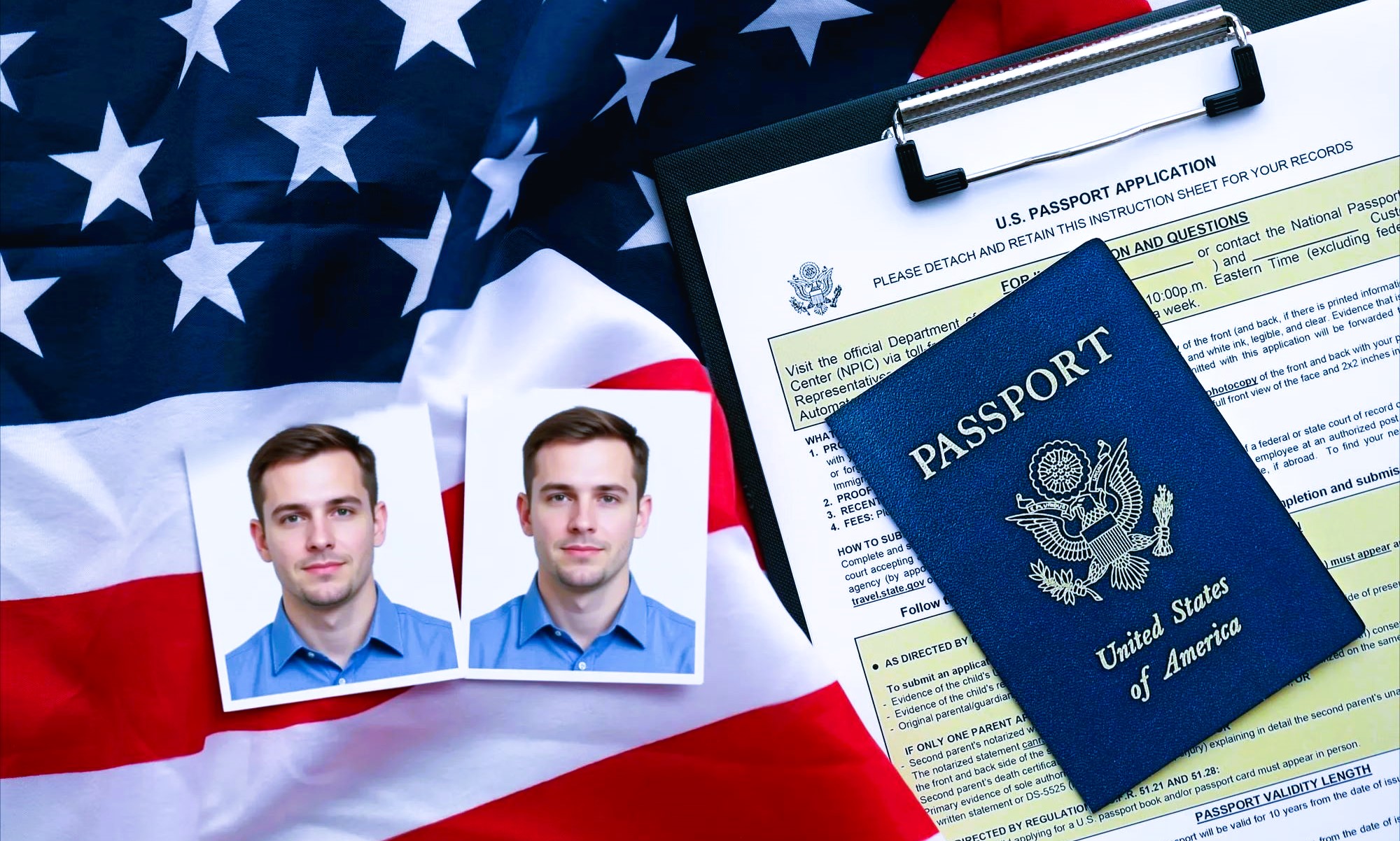
Applying for a US passport can feel like navigating a maze blindfolded. But don’t worry — once you know exactly what you need, the process becomes much easier. Whether you are applying for the first time or renewing your passport, preparing the necessary documents with the help of a passport photo maker will save you time, nerves, and a few grey hairs. Let’s break it down step by step, clearly and accessibly.
Understanding the Basics of a US Passport
Before diving into the paperwork, it’s important to understand what a US passport really is and why it matters. At its core, a US passport is far more than just a booklet of pages; it is an official government-issued document that confirms your identity and proves your citizenship. Think of it as a universal key—without it, traveling internationally becomes nearly impossible. From boarding flights to passing through customs, a passport is the single most important document for anyone planning to cross borders legally. It provides reassurance not just to foreign governments but also to you, offering peace of mind that you are recognized as a lawful citizen of the United States wherever you go.
A US passport isn’t just about travel convenience—it also serves as an incredibly powerful form of identification. While driver’s licenses and state IDs work domestically, passports are recognized worldwide. This makes them essential not only for vacations or business trips abroad but also for certain official situations at home, such as opening international bank accounts, enrolling in overseas programs, or even proving citizenship in complex legal matters. Having a passport on hand signals credibility and authenticity, and in many cases, it can even speed up bureaucratic processes that require verified identification.
Another important aspect to understand is the distinction between the passport book and the passport card. The passport book is what most people think of when they picture a passport: a booklet with pages for visas and stamps, accepted worldwide for all international travel. The passport card, on the other hand, is a smaller, wallet-sized document that can only be used for land and sea travel to Canada, Mexico, the Caribbean, and Bermuda. Knowing which type you need for your travel plans is critical because while the passport book provides maximum flexibility, the card is a convenient, less expensive option for frequent regional travelers.
Finally, it’s worth noting that US passports are also a form of personal security. Carrying an official passport reduces the likelihood of issues with immigration authorities, and in the unfortunate event of losing other forms of ID while abroad, it serves as your primary proof of citizenship and identity. For families traveling with children, having passports for every member ensures smoother processing at borders and minimizes the risk of delays or misunderstandings. In essence, the passport is not just a document—it’s a travel essential, a security tool, and a globally recognized symbol of American citizenship that makes international mobility possible with confidence and ease.
Identify Which Passport Application You Need
| Application Type | Who It’s For | Required Documents | Forms Needed | Additional Notes |
| First-Time Passport | Adults applying for their first US passport | Proof of US citizenship, Proof of identity, Passport size photo | DS-11 | Must apply in person; do not sign DS-11 until instructed by passport agent |
| Passport Renewal | Adults renewing an expired or soon-to-expire passport | Most recent passport, Updated passport size photo, Payment of applicable fees | DS-82 | Can often be submitted by mail if eligibility criteria are met |
| Minor Applicants | Children under 16 years old | Proof of US citizenship, Proof of relationship to parents, Parental consent forms, Passport size photo | DS-11 | Both parents/guardians must be present; special consent forms (DS-3053) required if one parent is absent |
| Lost or Stolen Passport | Any applicant who lost or had a passport stolen | Proof of citizenship, Proof of identity, Police report (optional), Passport size photo | DS-11 + DS-64 | Must apply in person; may require additional documents for verification |
| Expedited Travel | Applicants needing urgent travel | Proof of citizenship, Proof of identity, Passport size photo, Travel itinerary, Payment for expedited service | DS-11 or DS-82 depending on situation | Expedites processing (usually 4–6 weeks or faster if emergency); proof of travel is required |
Proof of US Citizenship
Proof of US citizenship is the cornerstone of any passport application. Without it, your application simply cannot move forward. This is the document that officially confirms you are a citizen of the United States, and it is required for both first-time applicants and, in some cases, renewals. Think of it as the foundation of your passport—everything else builds on this. When preparing your documents, it’s crucial to use original copies, as photocopies or digital versions will not be accepted at passport offices. Ensuring that you have valid, certified documents will save you time and prevent unnecessary delays.
- US Birth Certificate – This must be an official, certified copy issued by the city, county, or state of birth. Hospital-issued birth certificates or souvenir certificates are not acceptable. The document should include your full name, date and place of birth, and the signatures of issuing authorities. This is often the most common form of proof for first-time applicants born in the United States.
- Previous US Passport – If you have previously held a US passport, it can serve as proof of citizenship, but only under certain conditions. The passport must be undamaged and issued within the last 15 years. It should be a full, valid passport, not a passport card alone. Presenting this can make your renewal or replacement application faster since it already demonstrates prior verification of your citizenship.
- Certificate of Naturalization – This is required for individuals who became US citizens through the naturalization process. It is an official government document issued by the US Citizenship and Immigration Services (USCIS) that proves a foreign-born individual has legally obtained US citizenship. It contains essential details such as the individual’s full name, date of naturalization, and USCIS seal.
- Certificate of Citizenship – This document is necessary for people born abroad to US citizen parents who automatically acquire citizenship at birth. The certificate confirms that the individual is a US citizen and contains detailed information about the parent(s) and the child, including names, dates of birth, and legal verification of citizenship transmission.
- Consular Report of Birth Abroad (CRBA) – If you were born outside the United States and your US parents reported your birth to a US consulate, this document can serve as proof of citizenship. It provides the same legal recognition as a birth certificate issued within the US and is especially useful for children born overseas.
- Other Supporting Documents (if applicable) – In rare cases, additional documents may be requested to support proof of citizenship. These can include court-issued citizenship judgments, amended naturalization certificates, or official affidavits verifying citizenship when standard documents are unavailable. Always consult the passport office before relying solely on alternative documents.
Proof of Identity
Proof of identity is a critical part of your passport application process. Think of it as your personal ID badge that proves you are who you claim to be. Without it, the government cannot verify your identity, which is essential for issuing a passport. Unlike proof of citizenship, which establishes that you are a US citizen, proof of identity confirms your current legal identity, including your name, date of birth, and other personal details. It’s the key that unlocks your ability to receive your passport without unnecessary delays or complications.
There are several types of identification that are generally accepted by passport offices. A current and valid driver’s license is the most commonly used, as it contains your photograph, signature, and personal details. State-issued ID cards work just as well for applicants who do not drive. A previous US passport can also serve as proof of identity, making it particularly convenient for renewals. Military IDs are another acceptable form, offering a recognized government-issued identification option for service members. Each of these documents must be original and valid; expired or altered IDs will not be accepted.
When preparing your documents, it’s important to also consider supporting items that make the process smoother. For example, many applicants now use a passport photo maker to ensure that their passport photo meets all official specifications. Using a professional passport photo maker service guarantees the correct size, background, and quality, which prevents rejection due to photo errors. Even though the ID documents prove your identity, the passport photo is a visual verification of who you are, so combining accurate identification with a proper photo is crucial.
A practical tip to avoid delays is to bring a photocopy of your ID along with the original. Passport acceptance facilities often ask for a copy to retain for their records while verifying the original. This simple step can save you a trip back to the office if questions arise. By combining an original government-issued ID with a high-quality passport photo maker image, you ensure that your application is complete, professional, and ready for smooth processing.
Passport Photos
| Requirement | Details | Common Mistakes | Tips | Why It Matters |
| Size | 2 x 2 inches (51 x 51 mm) | Submitting larger or smaller photos | Use a professional passport photo maker or studio to ensure correct size | Ensures photos are compatible with government systems |
| Background | Plain white or off-white | Busy, colored, or patterned backgrounds | Avoid shadows; make sure background is consistent | Helps border control identify you clearly |
| Recency | Taken within the last 6 months | Old photos that no longer resemble you | Schedule photo session close to application date | Ensures your photo accurately represents your current appearance |
| Expression & Eyes | Neutral expression, both eyes open, mouth closed | Smiling, frowning, squinting, or eyes closed | Practice in front of a mirror or use passport photo maker guidelines | Facial recognition systems and officials rely on clear facial features |
| Head Position | Head centered, fully visible, facing forward | Tilted head, cropped face, or hair covering face | Follow instructions from professional passport photo maker | Ensures your identity is easily verified at checkpoints |
Completing the Application Form
- The form you need depends on your application type and situation.
- DS-11 is used for:
- First-time passport applicants
- Minors applying for the first time
- Replacing a lost or damaged passport
- DS-11 Requirements:
- Must be submitted in person at a passport acceptance facility
- Do not sign the form until instructed by the passport agent
- Include proof of US citizenship (original documents only)
- Include proof of identity (valid driver’s license, state ID, or previous passport)
- Include a recent passport photo, preferably from a passport photo maker
- Bring payment for applicable fees
- DS-82 is used for:
- Passport renewals by mail
- Applicants whose previous passport is still valid or expired less than 15 years ago
- DS-82 Requirements:
- Ensure your old passport is eligible for renewal
- Include your most recent passport with your application
- Include a recent passport photo (professional passport photo maker recommended)
- Include payment for applicable fees
- Mail the completed form along with documents in a secure envelope
- Double-check all personal information on either form to avoid errors
- Keep photocopies of all documents before submission for your records
- Follow all instructions from the State Department carefully to prevent delays
Parental Consent for Minors
Applying for a US passport for a child under 16 requires special attention because the government prioritizes the safety and legal protection of minors. Unlike adults, children cannot apply for a passport on their own. Both parents or legal guardians must provide consent to ensure that the application is legitimate and that all parties responsible for the child are aware of and agree to the travel documentation. This requirement helps prevent situations like international abduction or unauthorized travel, making the passport process for minors more stringent than for adults.
When submitting an application for a minor, there are several required documents to prepare. First, the DS-3053 form is necessary if one parent or guardian cannot be present at the time of application. This notarized statement provides legal consent from the absent parent and serves as official verification that both guardians approve of the child receiving a passport. Additionally, evidence of the parental relationship is required, typically in the form of a birth certificate, adoption papers, or court documents. These documents confirm that the adults applying on behalf of the child are indeed legally responsible for them.
Both parents or legal guardians must also present valid photo identification to the passport acceptance facility. This ensures that the individuals providing consent are correctly identified and legally authorized to act on behalf of the child. The combination of parental IDs, consent forms, and proof of relationship creates a secure framework that protects children while complying with legal requirements. It’s important to note that missing or incomplete documents are a common cause of delays or application rejections, so thorough preparation is crucial.
Finally, parents should approach the minor passport application with patience and care. The process is stricter than for adults, but following all instructions closely will ensure smooth processing. Bringing photocopies of all documents alongside the originals can help prevent additional trips to the passport office. By carefully preparing the DS-3053 form, parental IDs, and proof of relationship, parents and guardians can confidently navigate the application process and secure a US passport for their child without unnecessary complications.